
Storage Architecture Selection (ZFS vs XFS)
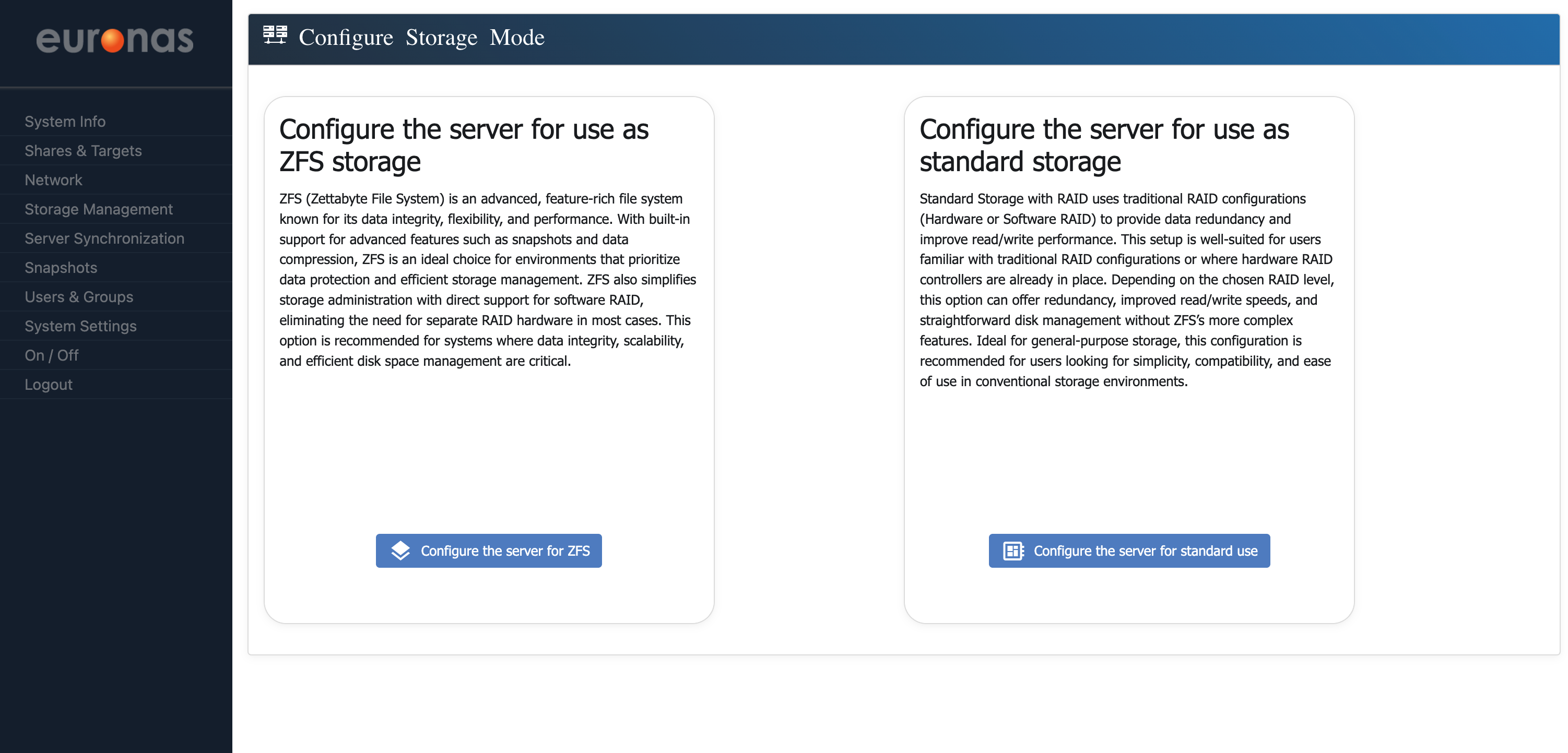
At this stage, you will be presented with the storage configuration screen, where you can choose how the server will be deployed. You have two options at this point which is configuring the system to use ZFS storage or standard storage based on XFS and RAID.euroNAS
ZFS is typically selected for environments that require strong data integrity and tightly integrated storage functionality. It includes features such as end-to-end data validation, in-memory caching (ARC) and granular RAID configurations (e.g. RAID-Z and mirrored layouts). These capabilities provide a high level of control and resilience, but come with increased memory and CPU overhead, particularly in larger or more demanding deployments.
XFS, when used with hardware or software RAID, represents a more traditional storage approach. It offers flexibility in how the underlying storage is configured, with lower memory and CPU overhead compared to ZFS, while relying on the RAID layer for data protection.
The choice between ZFS and XFS should be based on workload requirements, performance expectations, and available system resources.